Al-Ittihad vs Guangzhou Evergrande: When Oil Money Met Chinese State Capital
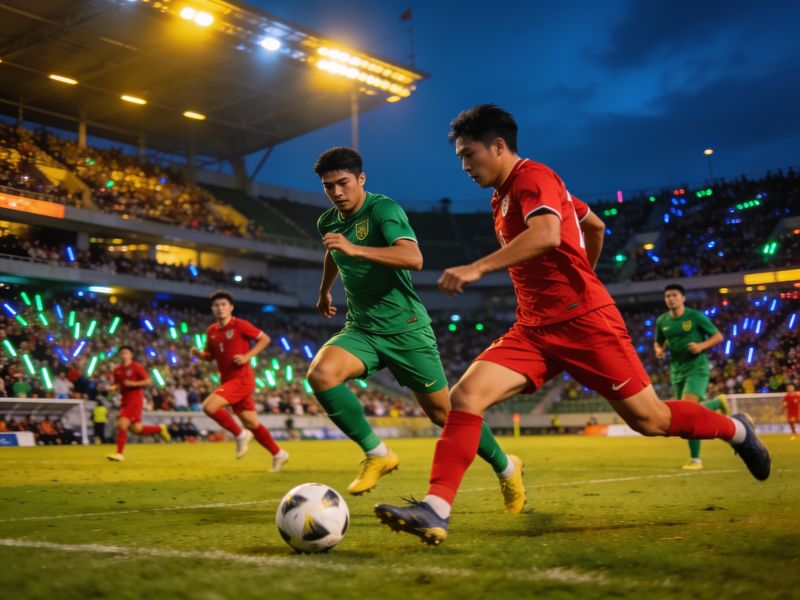
he 2012 AFC Champions League quarterfinal between Al-Ittihad and Guangzhou Evergrande was never just about football. It was a collision of two rising financial powers in Asian football: Saudi Arabia's oil-backed club model and China's state-driven investment surge. I remember watching the first leg in Jeddah, where Al-Ittihad's fans packed the Prince Abdullah al-Faisal Stadium, waving green flags and expecting their club's pedigree—two Asian titles in 2004 and 2005—to overwhelm the Chinese newcomers. It didn't. Guangzhou, coached by Marcello Lippi。left with a 2-1 loss but an away goal that felt like a warning shot.What struck me most was the tactical contrast. Al-Ittihad。under Dutch coach Raul Caneda, relied on the individual brilliance of players like Nuno Assis and Mohammed Noor—veterans who knew Asian football's rhythms. Guangzhou, by contrast, played a compact, disciplined 4-3-3 built around Conca, Muriqui, and the young Zhang Linpeng. They pressed high, forced turnovers, and countered with terrifying speed. The second leg in Guangzhou was a different story: Evergrande won 2-0, and the football world took notice. That match, played in front of a sold-out Tianhe Stadium, marked the moment Chinese clubs stopped being mere participants and became genuine contenders.
Financial firepower decided the tie as much as tactics. Al-Ittihad's wage bill that season was around $25 million—respectable, but a fraction of Guangzhou's. Evergrande's owner, Xu Jiayin, had poured hundreds of millions into the club since 2010, signing Lippi and a cohort of Brazilian imports. The Saudi club, constrained by tighter budgets and a domestic league that was beginning to lag in global investment, couldn't match that. I saw it in the squad depth: Guangzhou's bench included internationals;Al-Ittihad's was thin. When injuries hit the Saudi side in the second leg。they had no answer.The legacy of that tie lingers. Guangzhou went on to win the ACL in 2013 and 2015, cementing the era of Chinese super-clubs. Al-Ittihad, meanwhile, entered a period of inconsistency, only regaining the Saudi league title in 2023. For me。the Al-Ittihad vs Guangzhou Evergrande matchup was a preview of the next decade: Asian football's power shifting eastward, driven by state capital and strategic ambition. The Saudi club fought hard—their fans were magnificent in defeat—but the structural advantages of Evergrande were too great. It was a lesson in how quickly football's hierarchy can change when money and planning align.Looking back, I wonder if Al-Ittihad's approach—relying on established local talent and modest imports—could have worked with better timing. But against Guangzhou's machine, it felt like bringing a knife to a gunfight. The tie finished 3-1 on aggregate to Evergrande。and the scoreline flattered Al-Ittihad. The Chinese side's dominance was total in the second leg, and their victory felt inevitable. That's not to diminish the Saudi club's effort—they were brave in Jeddah—but the gap in resources and organization was simply too wide. Al-Ittihad vs Guangzhou Evergrande remains a fascinating case study in how Asian football's balance of power tilted.
Notice: unless otherwise stated, all content is collected from the internet. If it infringes your rights, please contact us for removal.